


Environmental, Social, and Governance (ESG) criteria (ESG) ENG
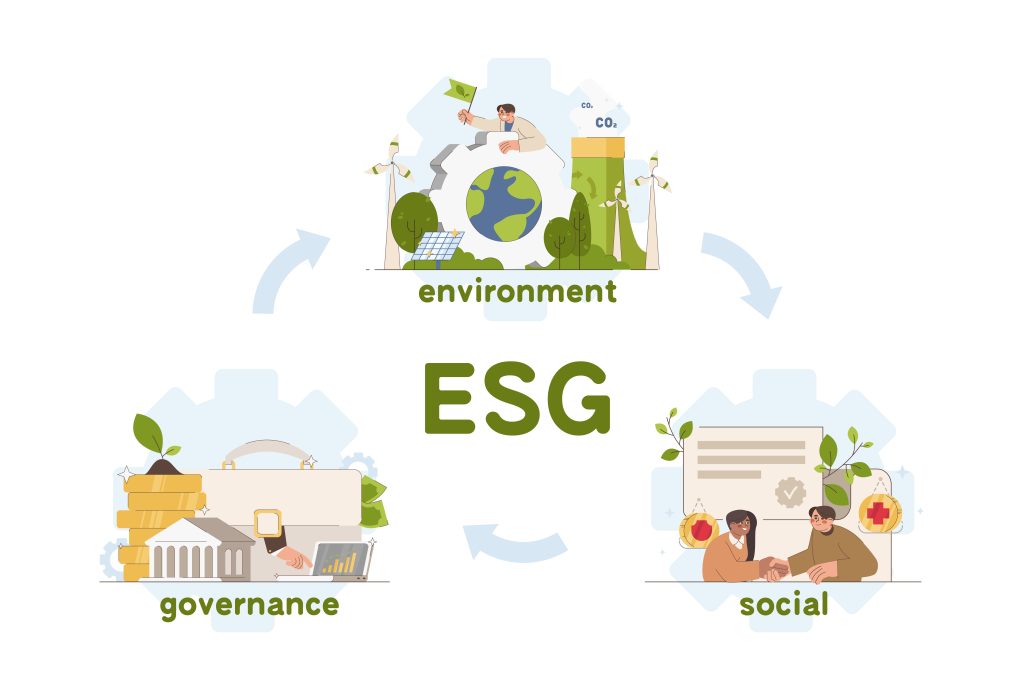
Environmental, social, and governance criteria are used to assess and demonstrate an organisation’s sustainability performance. Stakeholders expect organisations to deliver not only financial results, but also to make a positive contribution to society:
- The environmental criteria take into account whether the company operates in an environmentally responsible manner
- Social criteria refer to how an organisation manages its social relationships with employees, suppliers, customers, and the communities in which it operates
- Governance covers the management of the organisation, executive remuneration, audits, internal controls, and shareholder rights
Why is ESG important?
ESG practices have become increasingly important for companies for a number of reasons:
- They help companies identify and manage risks related to environmental, social, and governance factors
- Companies with strong ESG practices attract more investors and customers
- They ensure regulatory compliance
- They can generate cost savings through energy and resource efficiency
- They help build positive reputation and brand equity.
Vides eksperti office
Ganību dambis 24D-25,
Rīga,
LV-1005, Latvija
e-mail: birojs@videseksperti.lv
Rīga,
LV-1005, Latvija
e-mail: birojs@videseksperti.lv
Details
SIA “Vides eksperti”
Reg. nr.: 40003820612
VAT nr.: LV40003820612
Bank: A/S “Swedbank”, HABALV22
Account Nr.: LV21HABA0551013067770
Reg. nr.: 40003820612
VAT nr.: LV40003820612
Bank: A/S “Swedbank”, HABALV22
Account Nr.: LV21HABA0551013067770
