


Climate neutrality, climate resilience testing (climate proofing)
Climate proofing is the process of integrating climate change mitigation and adaptation measures into the design of infrastructure projects. Since September 2021, the introduction of the European Commission’s Technical Guidance on Climate Proofing for Infrastructure for the period 2021-2027 (2021/C 373/01) has made climate proofing an integral, inherent part of the European Union funding application process for all infrastructure projects.
The current EU funds are: InvestEU, Connecting Europe Facility (CEF), European Regional Development Fund (ERDF), Cohesion Fund (CF) and Fair Reconstruction Fund (FRF).
The main objective of climate proofing is to make infrastructure projects safer and more resilient to climate change, while respecting the principles of ‘energy efficiency first’ and ‘do no significant harm’, and ensuring that the level of greenhouse gas emissions from the project is consistent with the 2050 climate neutrality target.
Infrastructure in this context includes:
- buildings
infrastructure based on nature-based solutions
network infrastructure (energy infrastructure, transport infrastructure, information and communication technologies, water infrastructure)
waste management infrastructure
other physical infrastructure (financial, food, health, education, research, civil protection)
other eligible types of infrastructure (cultural heritage, tourism)
It is important to invest in climate-neutral and climate-resilient infrastructure to ensure low carbon emissions and to adapt to the inevitable impacts of climate change. Climate proofing is a powerful tool that will ensure investment in climate-neutral and climate-resilient infrastructure at European Union level.
The Technical Guidance on Climate Proofing (2021/C 373/01) divides the climate proofing process into two pillars, climate neutrality and climate resilience, and two stages, verification and detailed analysis. In any project, the first stage of climate proofing – verification – is applied to both pillars. The need for the second stage – detailed analysis – is determined by the outcome of the verification stage. A structural outline of the climate proofing process is shown in Figure 1.
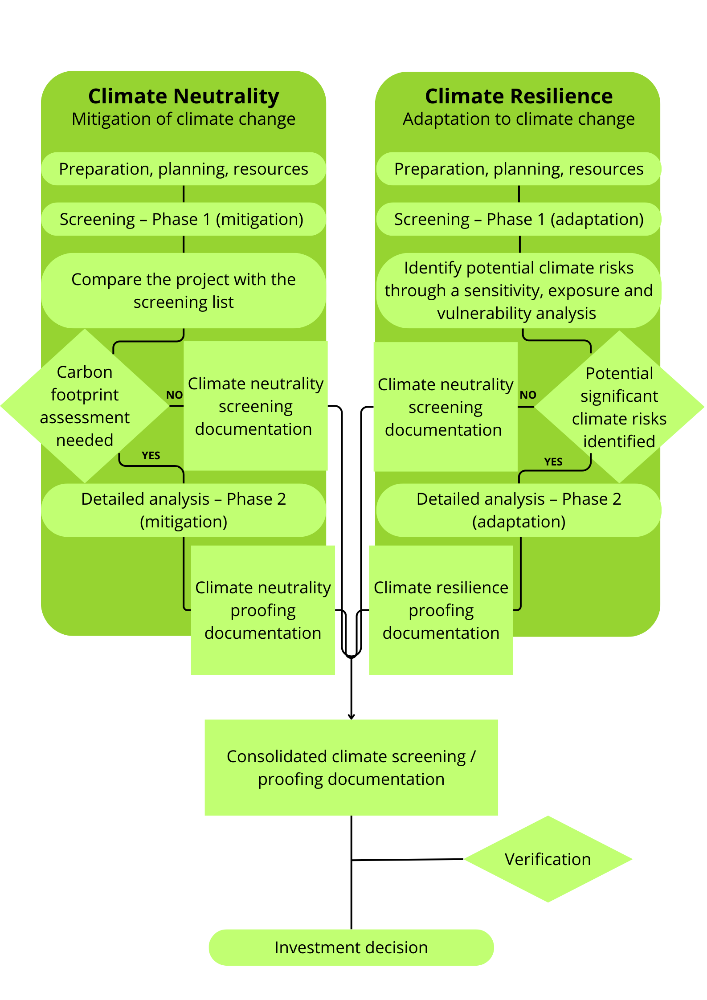
Figure 1. Flowchart illustrating the climate proofing process for infrastructure projects
In stage 1 of the climate neutrality assessment, a check is carried out to determine whether the project requires a carbon footprint assessment. If a carbon footprint assessment is applied, a detailed analysis is required – GHG calculation (tCO2e) and cost assessment (EUR/tCO2e) as well as an assessment of compliance with climate policy targets for 2030 and 2050.
Stage 1 of the climate resilience assessment should identify potential climate risks
through a sensitivity, exposure and vulnerability analysis. If significant climate risks are identified in stage 1, a detailed analysis with a risk assessment should be carried out, including probability and impact analysis and identification of climate adaptation measures.

Rīga,
LV-1005, Latvija
e-mail: birojs@videseksperti.lv
Details
Reg. nr.: 40003820612
VAT nr.: LV40003820612
Bank: A/S “Swedbank”, HABALV22
Account Nr.: LV21HABA0551013067770
